

I have often argued universities needed to think and act more like lean startups, based on my own experiences of the difference between successful and failed transformations. But the tools were not there for teams of academics, admin staff and students to experiment without handing system implementation over to a supplier and consultants for long and costly projects. Now these tools are here, and the approach to systems transformation needs to change.
In my previous article, “Confessions of a Transformation Lead”, I introduced the fact that I have developed a working student journey management system (SJMS 4.0). I started by building the essential data structures followed by the necessary workflow automations to connect the system backend to a frontend portal. I say, but of course I had a lot of help to get here. Using the n8n visual automation tool I transformed student journey maps, process diagrams, user stories and governance models into workflows for application, enrolment, progression and award. I have since created what I now understand to be a ‘Dockerised Node/React platform running on PostgreSQL and Prisma’, a sentence which suggests I understand the technology far more than I do! What matters is that having managed to join it all up – it works.
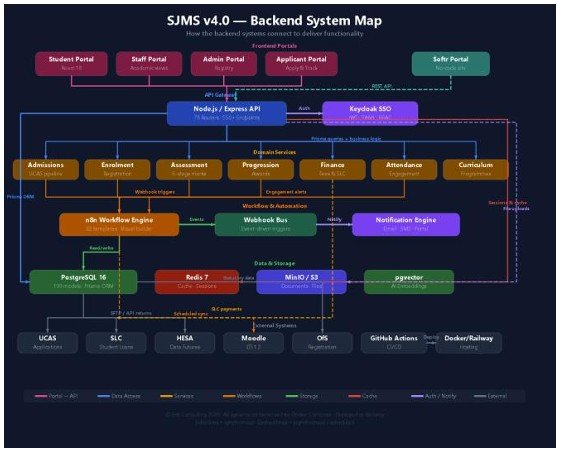
Working under the watchful (and sometimes weary!) eye of former head of IT systems and now FHE co-founder, Lyndon Shirley, who always balances my enthusiasm for new technology with the risks of shadow IT, I can now play a role in building what used to require a £10m+ programme and an army of consultants, development teams, and business analysts. These new tools allow me to build, test and reiterate ideas quickly until I get what I want.
And bitter experience has motivated me to avoid my negative past experiences when vendors sold systems with impressive front-end design in sales pitches, without the backend foundations to support them. I once trained for days on a system that turned out to be comprised solely of front-end templates – sold to us by a leading supplier in the market.
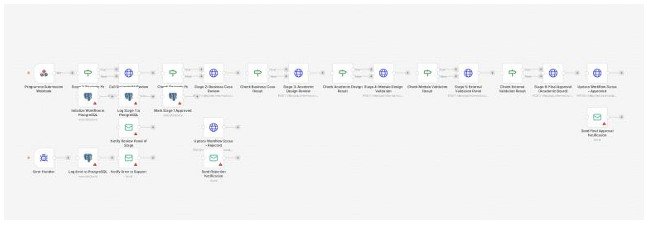
Instead, n8n has helped me to design, build and run end-to-end flows that are plugged into the system coding in days rather than months, while Claude Code, GitHub and Railway focus on the “hard” engineering side so that a lecturer-turned-registrar-turned-Prince II and Agile-trained transformation lead can become a product team bringing together a complex build.
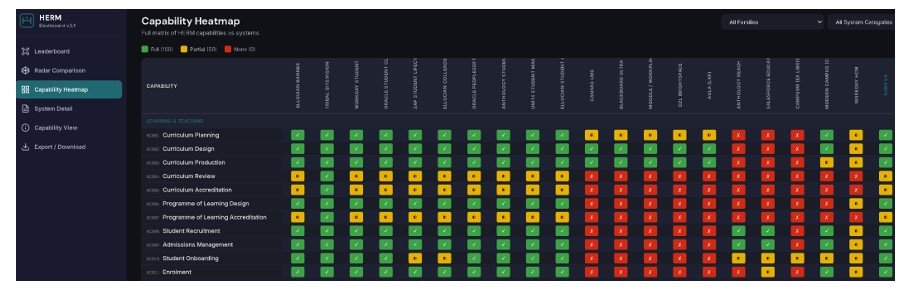
SJMS 4.0 has199 data models, 78 API routers and 62 workflow templates. It is still not quite production-ready, and my self-built enterprise review tool – which compares functionality with 20 industry leading systems has shown me that work is still needed to bring the product to an enterprise level fit to market. But the fact that so much has already been built by a small but experienced team should give every university leader pause for thought.
The lean startup university no longer feels like a thought experiment; it can run trial developments, build, break, fix and iterate product design that works in real time with data structures designed for the students, staff and HESA data returns of the future, rather than being stuck with systems whose core database was created in the 1990s.
SJMS 4.0 is a low-code management product which uses AI-assisted development tools and user-designed workflow automation. We no longer have to accept legacy platforms dictating our processes. University teams can benefit from low-cost adaptable systems capable of managing the student academic journeys and the support systems academics and administrators need, at a fraction of the cost. Why continue to waste money you don’t have?
Contact Future Horizons here if you want to know more or why not try our introductory course on designing workflow automation with n8n – and start the journey towards change.