
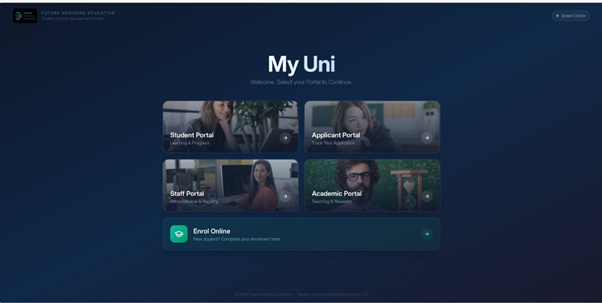
Future Horizons My Uni Front End Portal
23/03/2026
Confessions of a Transformation Lead: Developing University Systems from Scratch Using Automation Tools
For the past three decades I have worked as a lecturer, academic registrar and a transformation lead for £50m+ programmes at UK universities developing university systems. At the start of my career I collaborated with small development teams to implement innovative technological solutions. But over the last ten years one constant frustrated me: the waste of resources poured into large-scale University IT projects without delivering tangible benefits for students or staff.
I have sat in meetings in transformation departments with budgets totalling hundreds of millions of pounds, only to be met with silence when I asked how much of the implementation would directly benefit students and staff. We are continually constrained by legacy monolithic systems—like Tribal SITS and Ellucian Banner—which are inflexible, staggeringly expensive to upgrade, and often dictate a university’s processes rather than adapting to them.
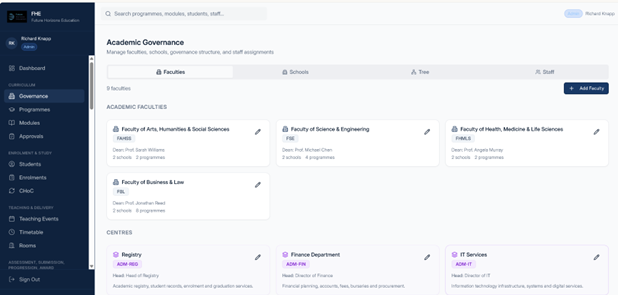
The pain and struggle of delivering new technology and the innovative work of my colleague, @David Minahan, led me to ask whether it would ever be possible, as a non-coder, to avoid the frustrations of the past and create the systems we need designed by the people who use them?
With the accessible tools now available, I embraced the role of academic ‘Citizen Developer’. Armed with 30 years of HE experience, multiple academic journey maps, specification docs and user journeys, I set myself a personal hackathon challenge: to build an end-to-end Academic Management System using enterprise-grade no-code workflow automation tools like n8n.
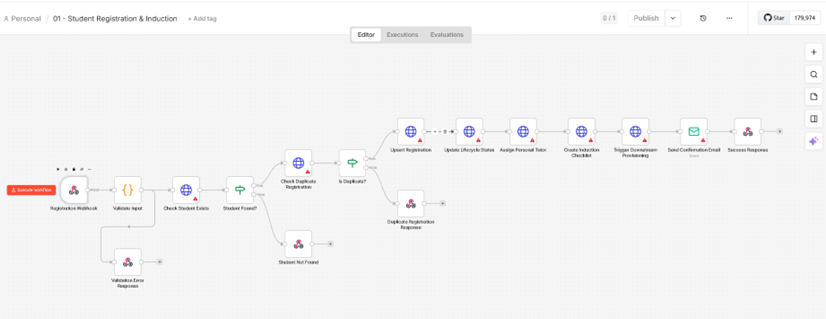
I trained myself to use n8n to adapt workflow maps into operational templates and I used Github, Visual Studio with Claude Code, Docker, Railway and PostgreSQL – tools familiar to developers but alien to me until now, to create the working prototype you see here.
Draft n8n Enrolment Workflow
Bringing University Users and Developers Together
Of course there are important caveats to this approach. While I have developed a working prototype, anyone who has managed enterprise architecture knows the risks of shadow IT in the real world. Any system managing student and academic data must be built with rigorous security in mind. But these tools allow much greater collaboration between IT and stakeholders.
I am now developing a full system for my imaginary ‘Future Horizons University’, using the Higher Education Reference Model (HERM) as my guide. This digital prototype has 10,000 imaginary students, 350 programmes or all types and 400 staff. I am testing to see how the system copes in simulations such as when students are frantically logging in to check results on publication day (something that caused SITs to collapse when I was an academic registrar). What happens during clearing and enrolment and all other key points in the Academic Journey?
Advanced no-code platforms are capable of delivering levels of development that were previously unthinkable. Any university considering a large-scale system implementation should pause and review the radical disruption these new tools are bringing.
Low-code tools like n8n create a prototype so that teams no longer spend hours identifying requirements on a whiteboard. Instead they can build a working model, showing what they need as the basis for a full spec system built with smaller development teams at much lower cost.
The Journey Ahead
Resolving these enterprise challenges is exactly what I plan to explore next. This post is the first in a series that will document my journey— successes, failures, and how to overcome them.
If we wanted systems fit for the future, we wouldn’t start from where we are. Low code tools allow us to do fresh builds at a fraction of the cost to deliver current and future requirements.
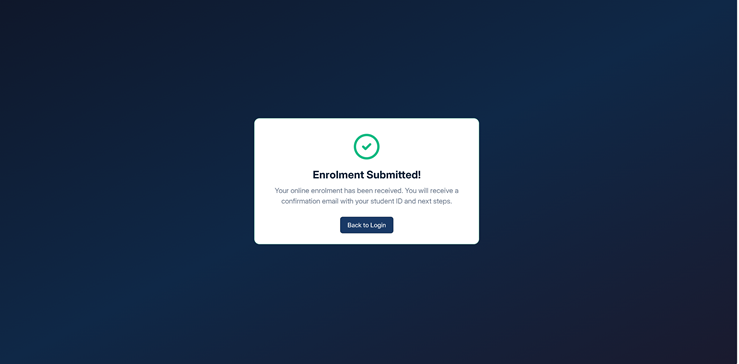
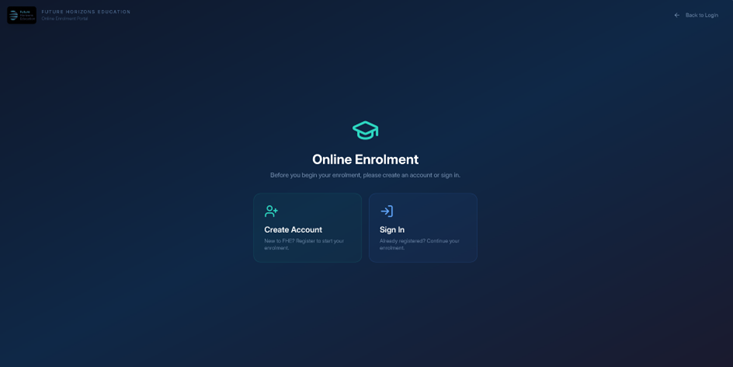
Enrolment Completion End Screen
If you are interested in seeing what these new tools can do we have created an introductory course in Udemy, AI Agents Strategy and Automations with Zapier and n8n, and you can sign up here:
I would love to hear your thoughts on this approach. Please reach out and connect with me via LinkedIn to discuss the realities of self-built university transformation.
Alternatively you can look at our in-production course portfolio here:
Richard Knapp, Future Horizons Education.