
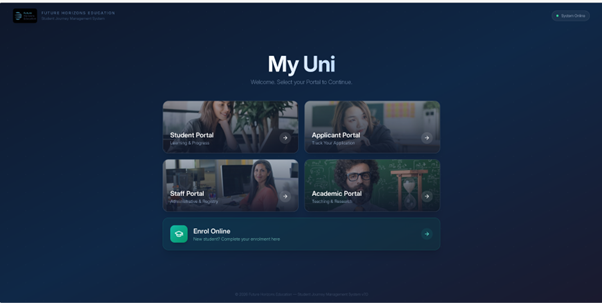
Why would a university spend millions adapting an outdated student record system when, for a fraction of the cost, it could adopt something newer, more adaptable and AI-assisted? It is a question I keep coming back to as I continue to develop our Student Journey Management System (SJMS), and watch most of the sector carry on as if these new tools simply do not exist.
The benefit is not only cost. For the first time, the people who actually use these systems – academics, administrators, students, registry teams – can do more than feed user stories into someone else’s hackathon. They can shape the processes, screens and reports they genuinely need for their day-to-day work.
The Old Model Is Failing on Its Own Terms
So why do universities keep adapting databases designed in the 1990s – and the 1990s, to be clear, was thirty years ago – instead of building something that fits today’s students, courses and regulatory landscape? Something that copes with micro-credentials, lifelong learning, online delivery and HESA Data Futures, rather than fighting them?
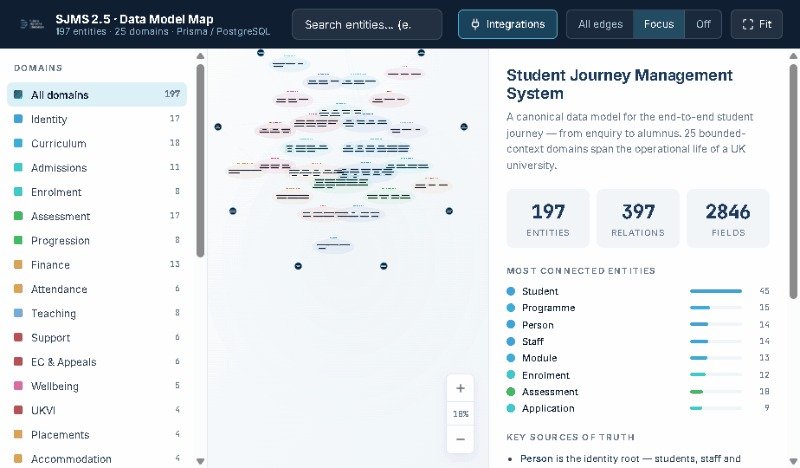
The familiar pattern is to swap SITS for Banner, Banner for Workday, or one legacy platform for a slightly newer version of the same thing – then spend millions on consultants, implementation partners, change managers and programme teams trying to make a silk purse out of a sow’s ear. The sector is haemorrhaging money on this approach, at the very moment universities are cutting staff, losing international student income and struggling to balance their books.
It Was Not Always This Way
Earlier in my career, at a small post-92 institution with very little money and a vice-chancellor who had no patience for wasted IT spend, we built things that some leading UK universities still do not have. Fully automated exam processing, fully online enrolment, integrated application and admissions systems. We did this decades ago, with one subject matter expert and a couple of developers. No army of consultants. No endless reiteration meetings. Just a clear idea of what we wanted,
A Different Way Is Already Working
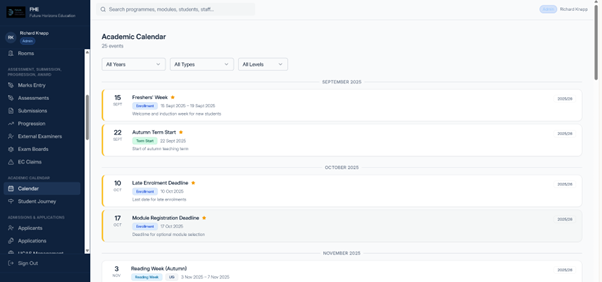
With SJMS we have shown that this kind of transformation can be delivered today, faster and far more cheaply, using AI-assisted development and low-code workflow automation. The tools are here. The data structures can be designed around your students and your processes, not around a vendor’s thirty-year-old schema.
If you are in the sector, and especially if you are about to procure a new student system, I would urge you to look hard at what is now possible before signing another multi-million-pound contract. The world is changing around higher education. If we do not respond, we will be left behind – and arguably, in places, we already have been.
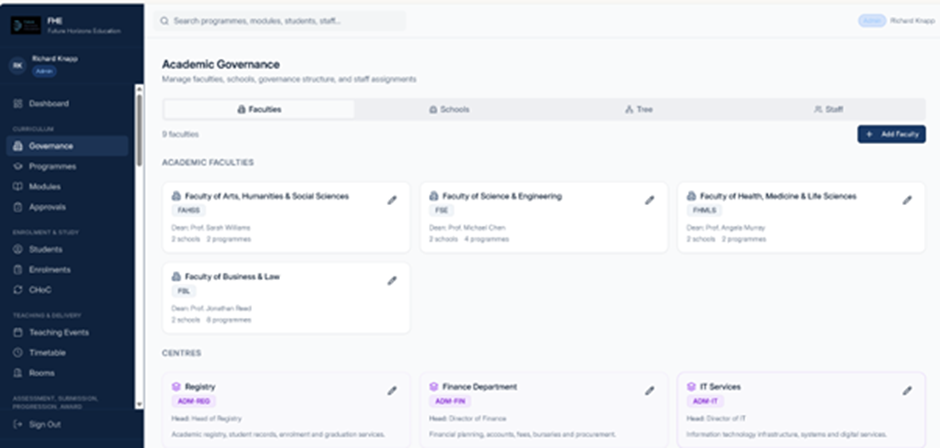
If you want to design something that genuinely serves the twenty-first-century student, do not start with a system designed in the 1990s.
Contact Future Horizons Education if you would like to know more, or take a look at our introductory course on designing workflow automation with n8n and start the journey towards a different way of working.