
The Future Horizons Education SJMS (Student Journey Management System) is being built by a startup co-founded between Switzerland and Wales. The system is positioned as an alternative to legacy platforms like Tribal SITS and Ellucian Banner — at a fraction of the total cost.

In my previous articles I catalogued the self-build of a Student Journey Management System (SJMS 4.0). Now I want to talk about the lessons I have learned from this experience.
The Challenges: Nothing Is As Simple As It Looks
This project has taught me that moving from a prototype to building a complex system involves layers of complexity that only reveal themselves over time. I have learned that when developing with tools like Claude code – you need an experienced developer to review build
plans because what the tool creates is often not what is stated, or what was intended.
There’s a specific pressure in an edtech startup development: you need something impressive to show potential university partners, but you also know that what you’re showing is not yet ready for production. Managing that gap — being honest about it without underselling the genuine progress — is harder than it sounds. SJMS has a genuinely impressive feature set but its data model and security stack needed to catch up with the ambitious of frontend user design.
The Data Model: Getting the Foundations Right
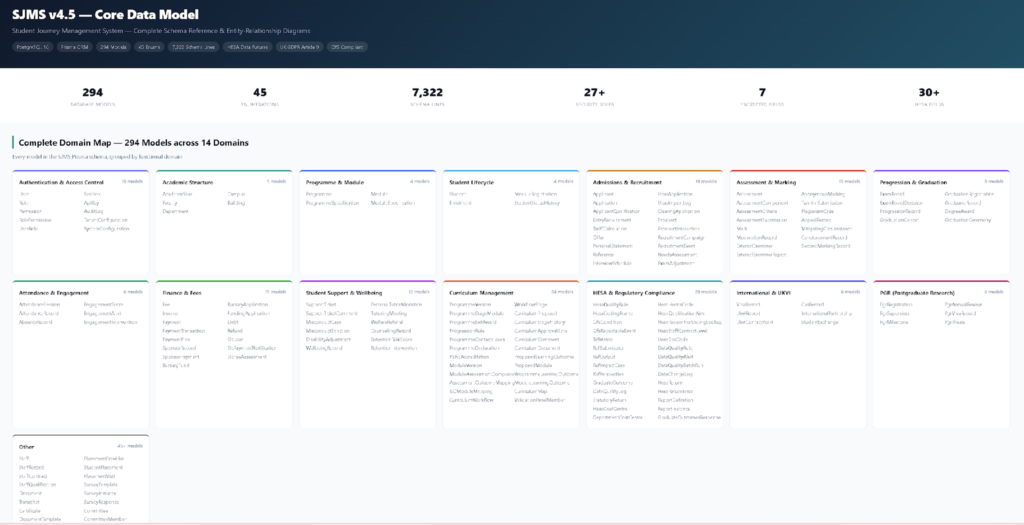
The most significant work of this next phase involved confronting a question common in any transformation I have been involved with: is the core data model actually right? In trying to construct a comprehensive data model I learned the same lesson that Universities and suppliers are learning when adapting their systems to the needs of HESA Data Futures.
Having a compliant data model is the starting point for a new system build. UK higher education is in a regulatory environment of considerable complexity: HESA Data Futures, OfS B3 conditions, Tier 4 compliance, GDPR, SLC protocols. A system that moves fast and breaks things can create institutional risk for its clients. Over time the pace of SJMS development has been calibrated to match the need for data accuracy and completeness.
Building a Team of Expert Perspectives
One of the most distinctive aspects in building complex systems with coding tools is that context is everything. Ask a generalist to review a finance model and you get generalist feedback. Ask a Senior Finance Architect with deep HE experience and the result is very different. This is where skills roles, tied to expertly crafted prompts, play a big role.
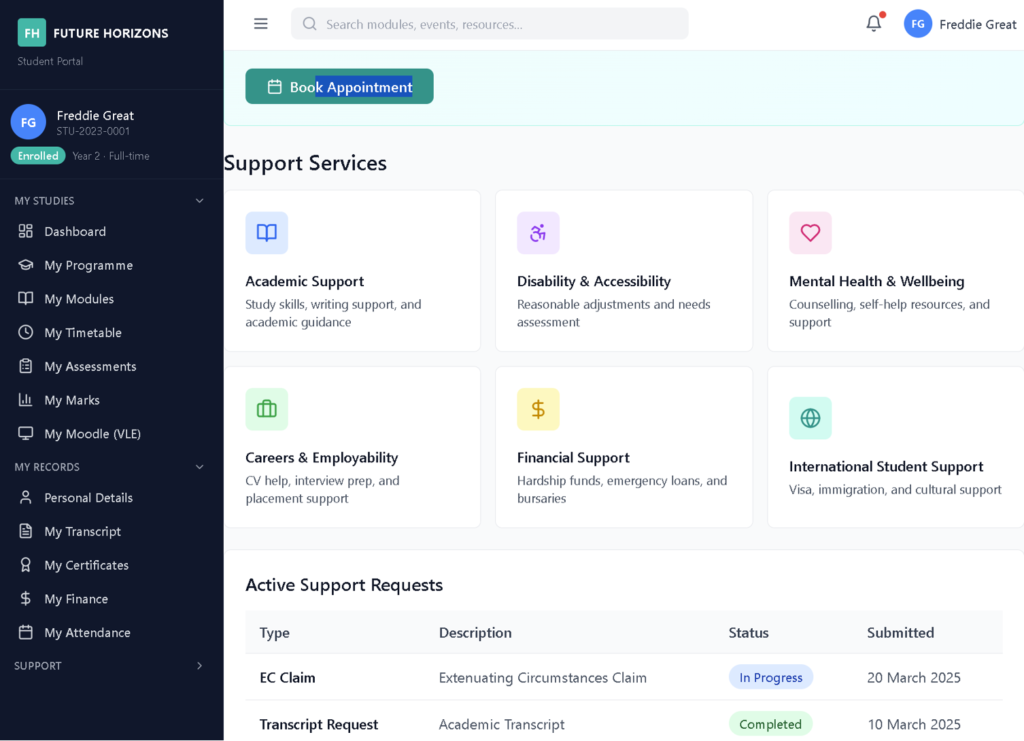
Skills roles built around the membership of project teams bring essential expertise into Claude Code sessions before anything is written or reviewed. The result for SJMS is a virtual project team of 58 expert roles, organised across five functional families. Here are some examples:
HE Systems Architect: Designs database schemas, makes architectural decisions on build.
Finance Domain Architect: Specialises in student accounts
HESA Data Futures Architect: Translates HESA learner/engagement/course entities
Security & GDPR Architect: Embeds access control and GDPR tracking
Registrar: Anchors system design in real university policy, practice, and academic governance.
Data Migration Lead: Plans safe transition and ensures data is maintained between versions.
Each role is implemented as a SKILL.md file which trigger conditions, responsibilities, decision frameworks, and acceptance criteria. Having the virtual equivalent of a full project team is invaluable: it enforces the discipline of thinking about problems from multiple expert viewpoints. It is a way of building a virtual review board inside the development process itself. Something that is difficult within conventional project teams.
SJMS 4.5 and What Comes Next
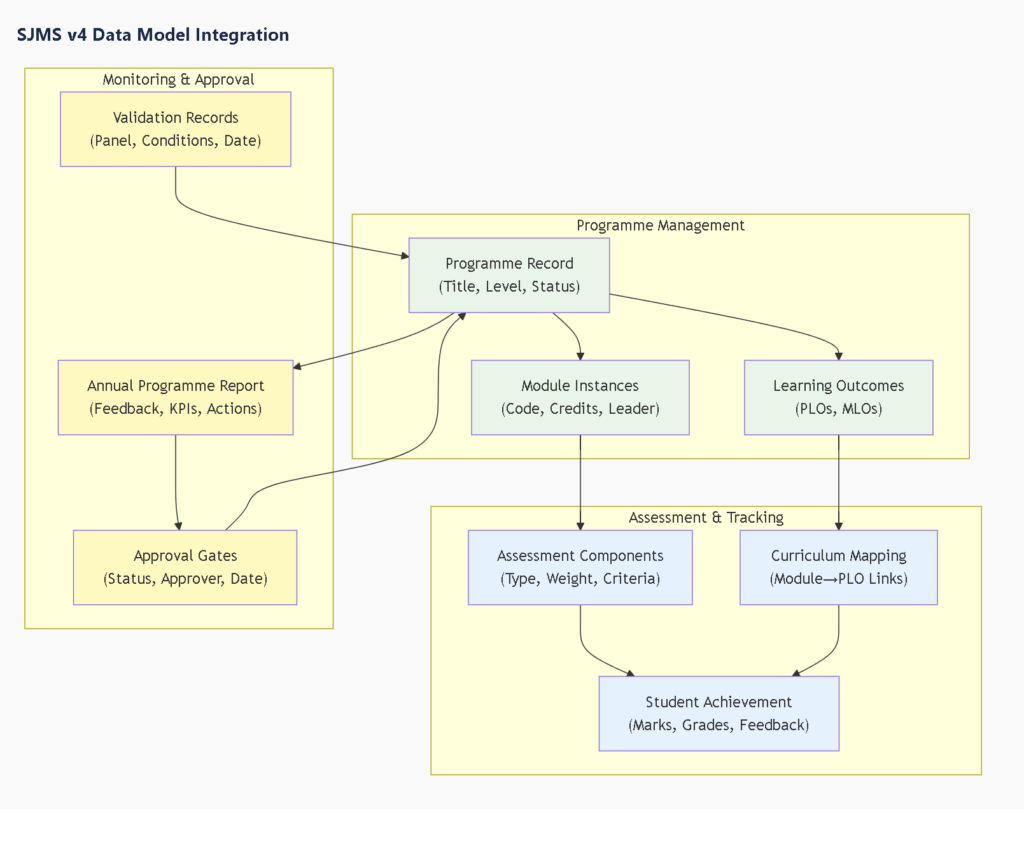
SJMS 4.5 represents the consolidation milestone: a system where the data model has been reviewed and validated, where the security status reflects the findings of the remediation review and the n8n automation layer handles business processes instead of hardcoded logic.
The next stage is to build the various integration layers necessary to make the system fully functional and scalable. And now I need an experienced developer – the human in the loop – to make this work. What started off as an experiment is leading to a serious system with a serious process around it. I am amazed with what can be achieved with the available tools.
If you’re working in UK higher education technology, edtech, or AI-assisted development, I’d welcome a conversation. This journey is getting more and more exciting.